The Futluz Approach
to Superior Digital Products
Engineering that ships. Outcomes you can measure.

- What we actually optimize for
- From idea to working software
- Teams that ship: small, senior, accountable
- Architecture: start simple, scale deliberately
- Dates are design inputs
- Delivery discipline without the drag
- Quality as a property of the system, not a phase
- Observability by default
- Security and compliance as pipelines
- Data and analytics from the start
- AI in the engineering loop, with guardrails
- You don’t start from zero: Futluz accelerators
- The first ninety days, in practice
- What clients notice
Futluz is development-first. We exist to turn intent into operating software—code in production that customers can use, your teams can trust, and your business can build on. Our view is simple: process is only valuable when it pulls the product forward. Everything else is ceremony. The pages that follow describe how we consistently move from strategy to a working system, why we optimize for momentum over theater, and how we design for Day-2 from Day-0 so the product keeps improving after launch.
What we actually optimize for
Measure one outcome relentlessly.
Every engagement begins with one non-negotiable outcome that we can observe in production. It’s not a slogan; it’s a sentence with numbers in it. Sometimes it reads like, “File a correct claim in under seven minutes with less than one percent data error,” or “Qualify an investor in under ninety seconds without manual review.” We make this outcome explicit because it becomes a compass for every decision: architecture choices, release cadence, what ships now versus next. When features compete for attention, the outcome breaks ties. When ambiguity rises, the outcome restores clarity. When progress is questioned, the outcome answers.
From idea to working software—fast, but never rushed
Make strategy tangible in code.
We collapse the distance between concept and code because reality teaches faster than slides. In the first weeks you will see a “walking skeleton”: a minimal slice of the system that handles authentication, routing, a real write to a real datastore, and real logging. We do it this way because touching a live, albeit narrow, flow forces decisions that matter—data shapes, API contracts, error behavior, performance budgets—while postponing arguments that don’t. By the end of the first month, stakeholders react to software rather than hypotheticals. That single change in feedback quality is often the biggest schedule risk reducer on a program.
Teams that ship: small, senior, accountable
Owners who design, code, and operate.
We deliberately keep squads small and composed of hands-on seniors who design, code, test, and operate. This is not a romantic preference for “ninjas”; it is a recognition that accountability and learning loops degrade as headcount and handoffs increase. A Futluz squad behaves like an owner: we embed with your people, adopt your constraints as our own, and prefer decisions that reduce long-term toil even when they demand short-term craft. When we write a line of code, we consider the on-call at 2 a.m. just as much as the demo at 2 p.m.
Architecture: start simple, scale deliberately
Simplicity now, elasticity when it pays.
We favor the simplest architecture that can meet the outcome with headroom. Sometimes that’s a modular monolith with a clear boundary between the user interface, a backend-for-frontend that shapes requests, and a handful of domain services. Sometimes a set of services pays for itself early—usually when teams must scale independently or throughput demands it. Either way, we insist on a few invariants: idempotent writes, correlation IDs that tie a user’s journey across components, explicit contracts between services with versioning, and migrations that can run without stopping the world. Reliability patterns—retries, backoff, circuit breakers—are not afterthoughts; they are part of day-one scaffolding.
Dates are design inputs
Deadlines that focus and accelerate.
We do not treat deadlines as optional. A date forces focus and, if used well, becomes a design primitive. We plan in thin, valuable slices that you can ship independently and measure immediately. Feature flags decouple deploy from release, letting us merge more often, test in production safely, and activate functionality when it’s truly ready. The rhythm is intentional: small deltas, frequent integration, visible progress. Momentum compounds.
Delivery discipline without the drag
Pipelines that protect speed.
Our delivery mechanics are intentionally boring because boring is stable and speed loves stability. We work trunk-based with short-lived pull requests. Pipelines build, test, analyze, scan, and deploy on every change. Review apps spin up ephemeral environments so a product manager can click through a change the same day it’s proposed. Promotions to QA, UAT, and production are automated and auditable. If we need to roll back, it’s a switch, not a scramble. Nothing here is novel; the novelty is doing all of it, consistently, from the first week—so velocity never comes at the expense of control.
Quality as a property of the system, not a phase
Built in, never bolted on.
We write tests that earn their keep. Small tests live close to the code that changes; contract tests guard the seams between services; a few well-chosen end-to-end checks protect the core revenue or risk-bearing flows without turning the suite into a brittle, click-recording museum. Performance is budgeted, not admired after the fact. When a change threatens p95 latency on a critical endpoint, the pipeline tells us before a user does. Data quality gets the same respect as code quality: constraints, uniqueness, and idempotent ingestion prevent phantom states that cost teams more than any single bug.
Observability by default
See everything; improve what matters.
You can’t improve what you can’t see, and you can’t see what you didn’t instrument. We ship structured logs, metrics, and traces from day one. Dashboards expose engineering health—error rates, latencies, saturation—but we also surface business truth: claims submitted, forms completed, conversions achieved. Service-level objectives are not inspirational posters; they are contracts that guide release pace. When we burn through the error budget for an API, we slow feature release and fix reliability. That trade-off is explicit, agreed, and enforced by the same pipelines that ship the code.
Security and compliance as pipelines
Controls automated at every commit.
Security is not a meeting at the end; it is a property of every commit. We keep secrets out of code, grant least privilege by default, and run static and dependency scanning in CI so regressions never land silently. PII is minimized, encrypted in transit and at rest, and access is auditable. Backups and disaster recovery are tested, not assumed. When regulations apply, we treat evidence generation as code too, so proof is produced by the system rather than by heroic effort.
Data and analytics from the start
Evidence in the room from day one.
We define an event taxonomy early and keep it stable. Both client and server produce analytics that land in a warehouse you can query—often BigQuery for exploration with GA4 for product telemetry, alongside operational metrics from the services themselves. The result is a habit: decisions made with evidence in the room. This is also how you learn after launch: instrumented software tells you where to optimize, what to retire, and where to invest next.
AI in the engineering loop, with guardrails
Power tools, not autopilot.
AI accelerates teams when you control context and cost. Our internal platform, DevCentral, keeps a shared, project-specific context that prompts can draw from so suggestions stay relevant and consistent. We route workloads across providers to balance throughput and price, and we log diffs so proposals are reviewed like any other code. AI writes drafts; engineers own decisions. It’s a power tool, not an autopilot.
You don’t start from zero: Futluz accelerators
Start from proven; focus on value.
Certain problems appear in every project, so we bring solved pieces. Dynamic Forms turns declarative schemas into living, validated forms—crucial for multi-tenant portals where each program differs subtly from the last. Our Document AI pipelines handle ingestion, OCR, entity extraction, validation queues, and human review with clean handoffs into your systems. Our modular building blocks—intake, processing, document handling, and evaluation—are designed to be generic and API-first, making it easy to integrate with your existing tools and workflows. The point of accelerators is not to dictate your product; it’s to remove the boring parts so your team’s creativity concentrates where value is created.
The first ninety days, in practice
From walking skeleton to launch.
Discovery is short and concrete: we agree on the outcome metric, surface the top risks, sketch the architecture north star, and define the contracts that let teams work in parallel. Then we build the walking skeleton and put it behind a feature flag so people can try it safely. Over the next sprints we widen the slice, wire analytics, and harden performance and security, all while shipping incremental value. When launch arrives, blue-green or canary releases reduce stress, and runbooks make on-call dull in the best way. Handover is continuous rather than theatrical; your team learns by doing and ends up owning a system they understand.
What clients notice
Speed first, calm next, learning always.
The first thing clients notice is the speed to something real. The second is a sense of calm: changes keep landing without chaos, and the system tells you what’s happening instead of making you guess. The third is a change in posture after launch; rather than defending a big-bang release, teams get curious again because the product is instrumented for learning. That’s the quiet success we’re after: software that moves the business forward and a team that’s proud to run it.
Superior digital products aren’t accidents. They result from a thousand practical choices made with a clear outcome in view, reinforced by engineering habits that protect speed instead of slowing it down. That is the Futluz approach: development that ships, operations that endure, and a product that keeps getting better because the people building it can see the truth every day.
In a landscape that never sits still, digital product leaders need flexibility, bold ideas, and clear vision. Futluz’s principles champion a dynamic approach—adapt quickly, focus on impact, and build experiences that matter.
Put them into practice and you won’t just refine your process—you’ll kick off a company-wide transformation. Teams will break through constraints, fuel lasting growth, and deliver products that outperform expectations. Product development is ongoing; every launch is the next starting line. Keep users first and let these principles guide you to the front of the pack.
Happy product engineering!
See what this approach can build on
The Futluz approach is how we work. Possibilities is where that work lands across platforms and technologies.
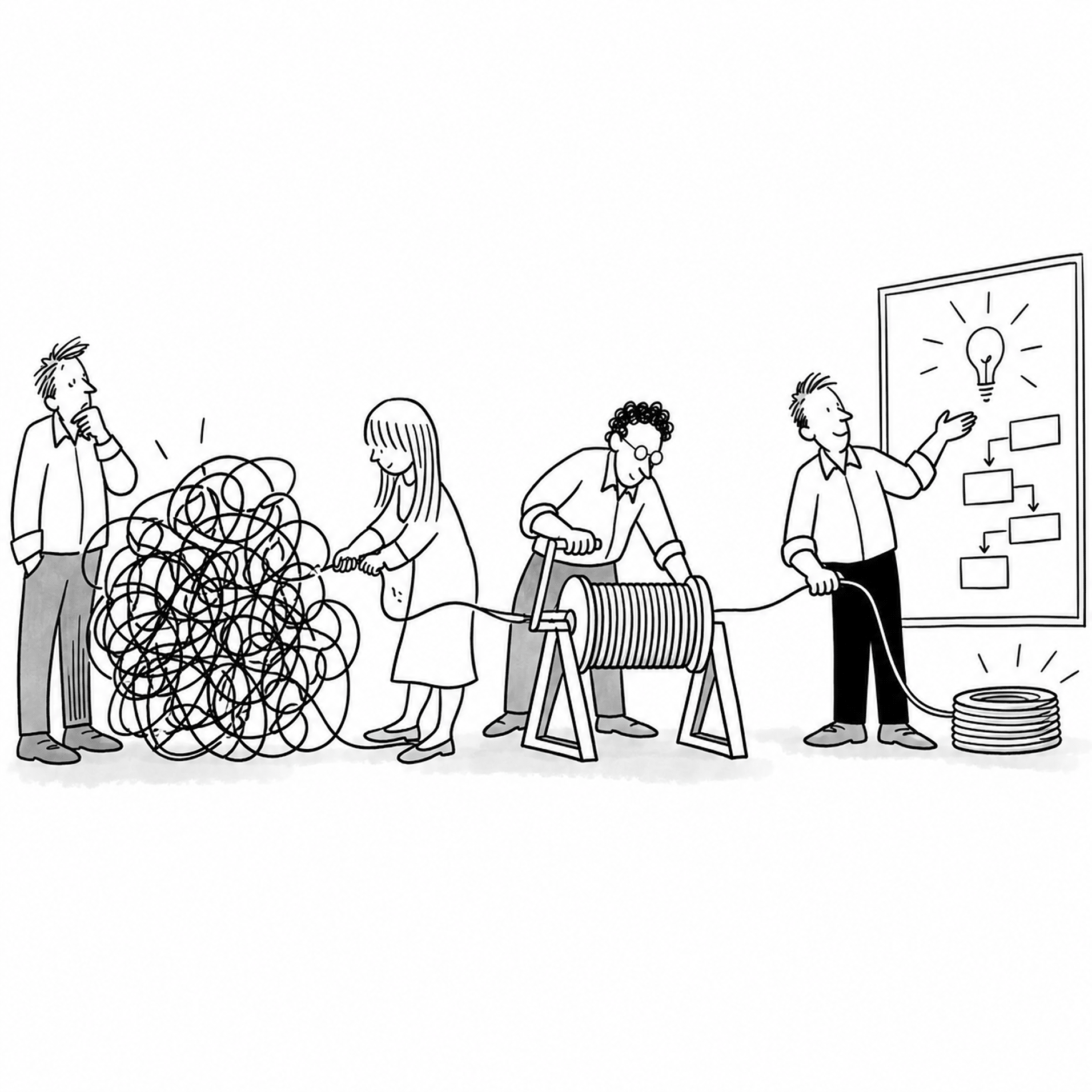
Need to untangle a complex project?
Futluz brings the engineering depth, structure, and momentum needed to get complex initiatives moving again and carry them through to delivery.